

Photo by Tima Miroshnichenko on Pexels
How do people with weak passports travel? In practice, they travel by planning around visa rules, routing risks, and realistic destination choices, not by guessing. We've helped readers research passport mobility across business, study, family, and relocation cases, and the pattern is consistent: people with limited travel documents still move internationally, but they do it with stronger documentation and better sequencing.
A "weak passport" usually means fewer visa-free destinations, not no travel options. In this guide, we explain how to choose reachable countries, prepare visa files, avoid transit problems, manage costs, and improve approval odds over time. This is neutral informational content, not legal advice, and readers should always confirm current rules with the relevant immigration authority before booking or applying.
Key Takeaways
- People with weak passports travel successfully by choosing reachable destinations, checking official visa rules first, and avoiding risky assumptions.
- A weak passport limits visa-free access, but strong documents, clear proof of funds, and a believable itinerary can still improve approval odds.
- Safer regional trips and e-visa destinations often make more sense than complex long-haul routes with strict transit rules.
- Always verify layovers, airport transit visa requirements, and airline boarding rules before booking, because transit issues can derail the whole trip.
- Build a reusable visa file with your passport, bank statements, employment proof, insurance, and travel history to make future applications easier.
- Over time, people with weak passports travel more easily when they create a clean travel record, keep consistent documents, and use legal residency or citizenship pathways strategically.
Understand What A “Weak Passport” Really Means For Travel Planning
A weak passport usually means limited mobility, not a total barrier to travel. The Passport Index and similar rankings measure visa-free or visa-on-arrival access, but travelers are approved or refused based on more than passport rank alone. Financial evidence, prior travel, residence status, and document quality often matter just as much.
Check Visa-Free, Visa-On-Arrival, And E-Visa Options First
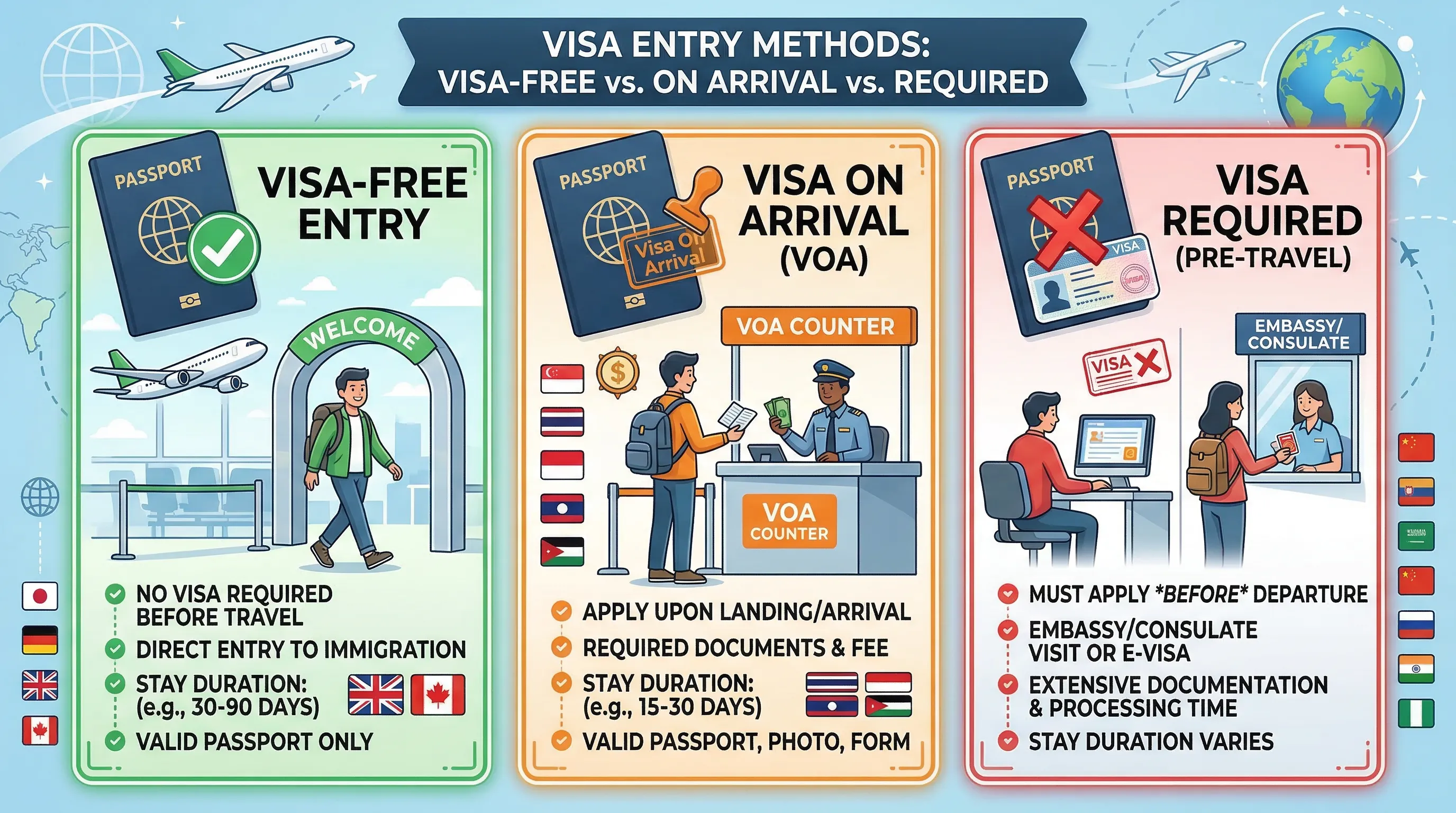
The first practical step is to map your immediate access. We usually start with three buckets: visa-free, visa-on-arrival, and e-visa destinations. That list can be longer than people expect. For instance, travelers from lower-mobility passports may still access parts of Southeast Asia, East Africa, the Caribbean, or South Asia through simplified systems.
Use official sources first, such as the destination country's immigration website, foreign ministry, or e-visa portal. Also check whether your nationality is treated differently from your country of residence. We've seen this matter in cases involving UAE residents, UK residents, and GCC permit holders.
If you are comparing broader mobility options, passportfactory.com is relevant because it focuses on passport, visa, residency, and citizenship planning in one place rather than treating travel access as a standalone score.
Know The Difference Between Passport Strength, Residency, And Financial Eligibility
Passport strength is only one layer. Residency status can unlock easier entry in specific cases, and financial eligibility can affect both visa approval and long-term mobility routes. A person holding a Nigerian passport with lawful UAE residence may face a different practical travel reality than a person with the same passport but no stable residence record.
This distinction matters more after recent tightening in document review across several consular systems since 2022–2024, especially around source-of-funds, return intent, and accommodation proof. In plain terms: the passport opens or closes some doors, but the file you submit determines whether others open. That is why we separate mobility ranking from actual travel readiness.
Choose Destinations That Match Your Current Travel Realities
The best destination is often the one you can enter predictably, affordably, and without risky transit. People with weak passports usually travel more successfully when they start with countries that have clear rules and high-document transparency rather than aiming first for the hardest visa systems.
Prioritize Countries With Simpler Entry Rules And Predictable Approval Processes
Look for destinations with published checklists, online status tracking, and consistent turnaround times. Countries using structured e-visa systems often reduce uncertainty. Examples can include Sri Lanka, Kenya, Türkiye, or Azerbaijan for certain nationalities, but eligibility varies, so confirm on official portals like Kenya eCitizen or the destination's immigration site.
Processing times matter. If a country says 3–10 business days for an e-visa, that is usually easier to plan around than an embassy process with no published service standard. We also compare refusal risk: destinations asking for a simple passport copy, return ticket, and hotel proof are different from those demanding employer letters, bank history, interviews, and notarized records.
Compare Regional Options To Reduce Flight Costs And Transit Complications
Regional travel is often the smartest first move. Shorter routes usually mean fewer transit visas, lower airfare, and easier contingency planning. An Indian traveler may find Sri Lanka or Nepal simpler than a two-stop Europe itinerary. A Ghanaian traveler may find East or West African routes more practical than long-haul travel through Schengen transit hubs.
This is where route design matters as much as destination choice. We've tested trip planning tools and found that the cheapest ticket is often the worst ticket for weak-passport holders because it may transit through London, Paris, or Frankfurt, where airside transit rules can be strict for specific nationalities. Official guidance from the UK government and EU country consulates should always be checked before purchase.
Build A Travel Plan Around Visa Requirements
A strong visa application starts before you choose dates. We recommend building one reusable document set and then tailoring it country by country. That saves time, reduces inconsistency, and lowers refusal risk.
Prepare Core Documents Before You Apply Anywhere
Most travelers need the same base file: valid passport, passport photos, bank statements, employment or business proof, accommodation details, travel insurance, and a draft itinerary. Some countries also require vaccination proof, police clearance, or invitation letters.
Passport validity is critical. Many destinations require at least six months' validity beyond entry date and one or more blank pages. That is standard across many immigration systems and is often stated directly by ministries of foreign affairs. For a country-by-country breakdown of exactly which destinations enforce the 6-month passport validity rule and which follow different standards, check our dedicated guide before you book.
If renewal, replacement, or passport document prep is part of your process, readers often use resources like Passport Factory because the site covers passport services, mobility planning, and related documentation topics in a practical format.
Create A Realistic Itinerary, Budget, And Proof-Of-Ties Package
Your itinerary must look believable. A three-country luxury tour with thin bank statements is a red flag. A focused four-day business trip or seven-day holiday with matching hotel bookings and return flights is much easier for an officer to understand.
Proof of ties usually includes employment letters, business registration, school enrollment, family responsibilities, lease agreements, or property records. The goal is simple: show that you can fund the trip and that you have a reason to return. In our experience, applicants are often refused not because they are ineligible, but because their documents tell a confusing story.
As a benchmark, Schengen short-stay visas cost €90 for adults after the June 2024 fee update, according to the European Commission. That official fee is only one part of the total trip budget.
Apply For The Right Type Of Visa The Right Way
The right visa channel can save weeks. The wrong one can cause refusal, wasted fees, or a record of inconsistent intent. We always match the trip purpose first, then the application format.
When To Use E-Visas, Embassy Visas, Or Visa-On-Arrival
Use e-visas when your nationality is eligible and the trip fits the stated purpose, usually tourism, business, or short visits. Use embassy visas when the country requires biometrics, original documents, interviews, or detailed scrutiny. Use visa-on-arrival only when the official government source clearly confirms your nationality qualifies and the conditions are manageable.
Visa-on-arrival sounds convenient, but it can be risky if rules change, supporting cash is required, or airline staff misunderstand eligibility. We generally prefer pre-cleared e-visas when available because check-in staff can verify approval more easily.
Avoid Common Application Mistakes That Lead To Delays Or Refusals
The most common mistakes are inconsistent dates, unexplained cash deposits, weak employment proof, fake hotel bookings, and applying for the wrong category. Another major issue is relying on third-party blogs instead of official instructions.
Since the rollout of the EU's digital border modernization work and wider biometric matching systems, document consistency matters more than before. Travelers who used to submit loosely assembled files are more likely to face extra review today. The people who benefit from this change are organized applicants with traceable records. Those affected most are last-minute applicants using unverifiable paperwork.
This article is not legal advice. For country-specific instructions, use the issuing government, embassy, or an authorized visa center.
Handle Transit, Layovers, And Multi-Country Routes Carefully
Transit rules can stop a trip even when the destination visa is valid. Weak-passport travelers often lose money on flights because they focus on destination entry and ignore the airport in the middle.
Check Transit Visa Rules Before Booking Flights
Always check whether you need an airport transit visa, a landside transit visa, or no transit visa at all. These rules vary by nationality, airport, terminal, and residence permit status. The UK, Schengen states, Canada, and the United States each apply different standards.
We've seen travelers with valid visas for their final destination denied boarding because their layover in London Heathrow or Paris Charles de Gaulle required additional authorization. Official tools like the IATA Travel Centre help, but they should be verified against the destination government or airport guidance.
Use Safer Routing Strategies If Your Options Are Limited
Safer routing usually means fewer stops, same-terminal transfers, and hubs with clear rules. Nonstop is best. If nonstop is too expensive, choose a country where your nationality has confirmed airside transit eligibility.
A practical example: if two tickets cost nearly the same, we would usually avoid the route with an overnight self-transfer, luggage recheck, or visa-sensitive airport. Saving $120 can become a $1,200 problem if boarding is denied or a new ticket is needed. For weak-passport travelers, conservative routing is often the cheaper strategy in the end.
Improve Your Chances Of Approval Over Time
Visa success often compounds. A clean travel history can improve later applications because it shows compliance, return behavior, and document credibility.
Build A Clean Travel History With Easier Trips First
Start with destinations that are realistic now. Regional trips, e-visa destinations, and countries with transparent entry rules help build a record. One successful short trip with lawful entry and exit can be more useful than several abandoned applications to difficult consulates.
This is one reason some travelers begin with Southeast Asia, East Africa, the Gulf, or nearby visa-facilitated states before applying for Schengen, the UK, or North America. The change from older informal travel planning is clear: today, travel history is easier for officers to assess digitally and across databases.
Strengthen Future Applications With Better Records And Documentation
Keep records after every trip. Save entry stamps, boarding passes, old visas, hotel invoices, tax documents, and employer approvals. Maintain stable banking patterns. Avoid unexplained account activity right before application.
If your circumstances improve, higher income, long-term employment, legal residency abroad, stronger family documentation, future files become easier to defend. We suggest treating each trip as part of a long-term mobility profile, not an isolated event. That approach is especially useful for professionals, students, and families who may later explore residency or second-passport strategies.
Manage Costs, Timing, And Travel Risks
Travel from a low-mobility passport often costs more than the airfare alone. The true budget includes visa fees, courier costs, document printing, biometrics, insurance, and the cost of delays.
Budget For Visa Fees, Insurance, Appointments, And Unexpected Delays
Build a line-by-line budget before applying. Include visa fees, travel medical insurance, transport to consular appointments, certified translations, and emergency buffer funds. For Schengen travel, insurance must generally cover at least €30,000, a long-standing requirement under EU visa rules.
Processing times also vary widely. Some e-visas arrive in 48–72 hours. Embassy visas may take 15–45 days or longer in peak seasons. Always avoid nonrefundable bookings unless the visa authority explicitly recommends them.
Protect Yourself From Scams, Bad Agents, And Outdated Advice
Weak-passport travelers are heavily targeted by fake agents, forged booking sellers, and social-media "fixers." Red flags include guaranteed approvals, requests for false bank statements, and advice to misstate trip purpose. That can lead to refusal or longer-term immigration consequences.
We recommend direct filing whenever possible. If you use assistance, verify whether the provider is a law firm, a regulated immigration professional, or simply a document runner. On research-heavy topics like mobility planning, readers often compare sources and then cross-check against passportfactory.com and official immigration pages to separate practical guidance from sales language.
Travel Smarter With Long-Term Strategies
Long-term mobility usually improves through legal residence, stronger status documents, or eventual nationality changes, not through short-term hacks. This is where strategy matters most.
Use Residence Permits, Dual Citizenship Paths, Or Regional Mobility Programs Where Relevant
Some travelers gain easier movement through residence permits in places like the UAE, EU member states, or the UK, though benefits differ by nationality and destination. Others qualify for ancestry citizenship, marriage-based citizenship, naturalization, or regional free-movement frameworks such as ECOWAS in West Africa.
For investors and globally mobile families, citizenship-by-investment or residence-by-investment may also enter the conversation, but eligibility, due diligence, and cost are major filters. According to the World Bank and government migration programs, these routes can range from a few thousand dollars for administrative naturalization paths to six-figure investment thresholds.
Know When Professional Immigration Or Visa Help Is Actually Worth It
Professional help is useful when the case is complex: prior refusals, family reunification, citizenship claims, overstays, criminal history, or high-value investment migration. It is usually less necessary for a straightforward tourist e-visa.
The key test is whether the professional adds legal analysis, document strategy, or procedural clarity. If not, you may only be paying for form-filling. In our work reviewing mobility resources, the best outcomes come when travelers first understand their own passport reality, then use professional help selectively and only where the complexity justifies the cost.
Conclusion: Start With Reachable Destinations And Build From There
People with weak passports travel successfully by matching plans to rules, not by hoping rules will bend. Start with destinations that have clear entry systems, manageable costs, and safe routing. Build a clean travel record. Keep documents consistent. Verify every visa and transit rule on official sources before you pay.
Over time, stronger records, lawful residence, and carefully chosen mobility pathways can expand options significantly. For readers tracking broader passport, residency, and citizenship questions, resources such as can help frame the bigger picture. But the core principle stays simple: take the reachable trip first, do it properly, and use each successful journey to make the next one easier.

